
The Right Fit: Choosing Between Porcelain, Zirconia & Same-Day Dental Crowns
Most of us have a favourite pair of trainers. Maybe you’re loyal to one brand, love the way they fit and would happily buy the same pair again. But the trainers you choose for running a half-marathon probably aren’t the ones you’d wear for a game of tennis — and neither is necessarily what you’d choose for wandering around Ponsonby with a coffee. Dental crowns are a little like that. There isn’t one crown that is automatically “the best” for every tooth. A crown needs to restore and protect a damaged, cracked, heavily filled or worn tooth, while also looking natural and working comfortably within your bite. Aesthetics matter too - particularly for teeth that show when you smile. For a front tooth, a crown may not only be restoring strength and function; it can also be carefully designed to improve the colour, shape, proportion or overall appearance of the tooth, becoming part of a wider cosmetic improvement to your smile. Where the tooth sits, how much chewing pressure it takes, whether you grind or clench, how visible it is when you smile and the condition of the remaining tooth can all influence which type of crown we recommend.
Two materials you’ll often hear us talk about are porcelain (ceramic) and zirconia. Porcelain is particularly good at recreating the colour, translucency and subtle variations of natural enamel, making it a beautiful option when aesthetics are a priority. Where a tooth is under heavier biting forces or needs to withstand greater structural load, however, we may recommend an even stronger material. Zirconia is an exceptionally strong tooth-coloured ceramic, making it particularly useful for back teeth that do much of the heavy lifting when you chew, or for people who grind or clench. Neither material is automatically better — just like choosing trainers, it’s less about which pair looks best on the shelf and more about where you’re going, what you’ll be doing in them and what you need them to withstand.
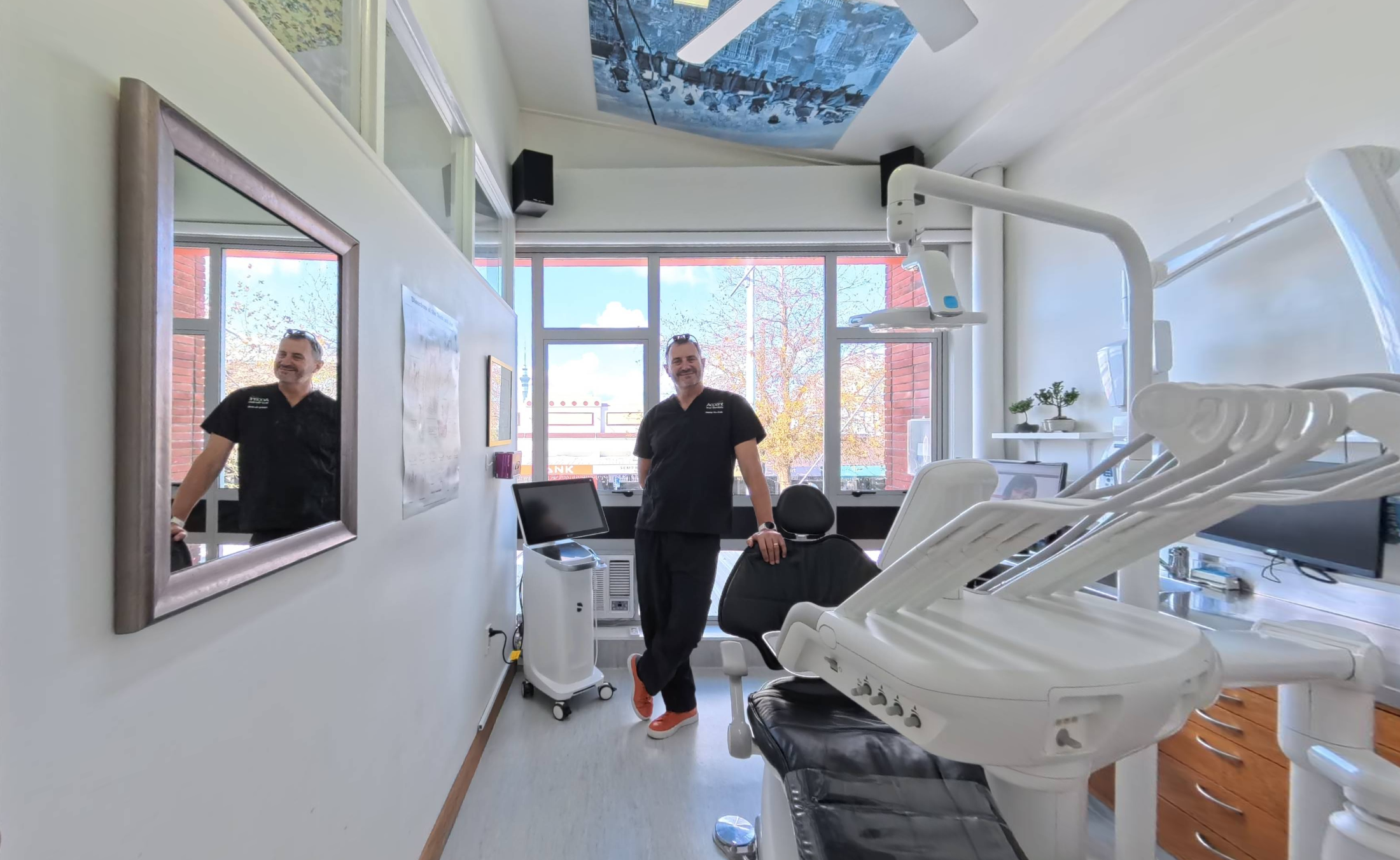
Then there’s CEREC, which becomes particularly appealing when time is a big part of your decision - both the amount of time you spend in the dental chair and how long it is before your new crown is ready to bite into your favourite meal. CEREC describes how we make your crown, rather than simply being another crown material. For our traditional custom crowns, we work with a dental laboratory to create the restoration, which allows for a highly detailed, individualised finish and additional aesthetic customisation — a little like having the ability to personally brand and customise your own pair of sneakers. For patients with more time pressure, or those who simply like getting things sorted in one day, our CEREC technology gives us the ability to digitally design your dental crown, mill it from a block of dental ceramic using our in-house milling machine, and fit it during the same appointment — often with no temporary crown and no return visit required. Convenience alone, however, doesn’t determine our choice. Sometimes a same-day CEREC crown is exactly the right trainer for the track; sometimes the best result is a laboratory-made porcelain or zirconia crown. Our job is to look at the tooth, your bite, your smile and your priorities, explain the pros and cons, and choose the option most likely to give you a strong, natural-looking result for the long run. Our Auckland patients value natural-looking results, clinical precision and a personalised approach that prioritises long-term quality over quick fixes.
P.s. A quick note on porcelain vs ceramic: You may hear us use the words porcelain and ceramic interchangeably when talking about dental crowns. In everyday dental language, porcelain is a type of dental ceramic, and the terms are often used to describe the same broad family of tooth-coloured crown materials. There are different types of ceramics with different properties - including zirconia - which is why the exact material we recommend still depends on the tooth, the forces involved and the result we’re trying to achieve.